-
×
 Felix Economakis – 4Rs Model
1 × $69.00
Felix Economakis – 4Rs Model
1 × $69.00 -
×
 Bill Bronchick – Flipping Properties
1 × $57.00
Bill Bronchick – Flipping Properties
1 × $57.00 -
×
 FXC Trading – Holy Grail
1 × $35.00
FXC Trading – Holy Grail
1 × $35.00 -
×
 Selena Soo – Get Known and Get Clients
1 × $48.00
Selena Soo – Get Known and Get Clients
1 × $48.00 -
×
 Body By Rings
1 × $33.00
Body By Rings
1 × $33.00 -
×
 Talmadge Harper – Quantum Hypnosis Healing Personal MP3
1 × $33.00
Talmadge Harper – Quantum Hypnosis Healing Personal MP3
1 × $33.00 -
×
 2 Girls Teach Sex - Extreme Female Orgasms
1 × $29.90
2 Girls Teach Sex - Extreme Female Orgasms
1 × $29.90 -
×
 Jason Wojo – 60 Viral Video Scripts (60 Viral Topics + 60 Hooks Bundle)
1 × $11.00
Jason Wojo – 60 Viral Video Scripts (60 Viral Topics + 60 Hooks Bundle)
1 × $11.00 -
×
 Renaissance Periodization – “Male Physique Training Templates”
1 × $37.00
Renaissance Periodization – “Male Physique Training Templates”
1 × $37.00 -
×
 Matt Clark and Jason Katzenback – Amazing Selling Machine 11
2 × $9.00
Matt Clark and Jason Katzenback – Amazing Selling Machine 11
2 × $9.00 -
×
 Cris Chico – Find Motivated Sellers Online
2 × $54.95
Cris Chico – Find Motivated Sellers Online
2 × $54.95 -
×
 David Webber – Seeing Clearly
1 × $25.00
David Webber – Seeing Clearly
1 × $25.00 -
×
 Steven Heller – Unconscious Restructuring
1 × $19.90
Steven Heller – Unconscious Restructuring
1 × $19.90 -
×
 Wall Street Prep – Self Study Programs (Premium Package)
1 × $57.00
Wall Street Prep – Self Study Programs (Premium Package)
1 × $57.00 -
×
 BeSomebodyFX – The Real Fundamental Analysis
2 × $11.00
BeSomebodyFX – The Real Fundamental Analysis
2 × $11.00 -
×
 Scott Jack – Magnetic Interaction
1 × $15.00
Scott Jack – Magnetic Interaction
1 × $15.00 -
×
 Julie Solomon – Pitch It Perfect
1 × $67.00
Julie Solomon – Pitch It Perfect
1 × $67.00 -
×
 Talmadge Harper – Quantum Healing 1.0 – 4.0
1 × $35.00
Talmadge Harper – Quantum Healing 1.0 – 4.0
1 × $35.00 -
×
 Ginny and Laura – 400K Instagram Launches
1 × $9.00
Ginny and Laura – 400K Instagram Launches
1 × $9.00 -
×
 TrendyOutlet – Viral Video Hooks Pack
1 × $12.00
TrendyOutlet – Viral Video Hooks Pack
1 × $12.00 -
×
 Digital Income Project – Content MBA
1 × $33.00
Digital Income Project – Content MBA
1 × $33.00 -
×
 Apteros Trading – Learn to Scalp
1 × $79.00
Apteros Trading – Learn to Scalp
1 × $79.00 -
×
 Managing and Thriving in Uncertainty John Overdurf
1 × $9.00
Managing and Thriving in Uncertainty John Overdurf
1 × $9.00 -
×
 Mike Pearson – Stupid Simple SEO 2.0 (Advanced)
1 × $15.00
Mike Pearson – Stupid Simple SEO 2.0 (Advanced)
1 × $15.00 -
×
 Joseph Song – YouTube University Course and YouTube Automation
1 × $24.00
Joseph Song – YouTube University Course and YouTube Automation
1 × $24.00 -
×
 Kyle Milligan – The Process – A Draft By Draft Copywriting Walkthrough
1 × $49.00
Kyle Milligan – The Process – A Draft By Draft Copywriting Walkthrough
1 × $49.00 -
×
 Paul Scheele – Abundance for Life (Deluxe Digital Course)
1 × $42.00
Paul Scheele – Abundance for Life (Deluxe Digital Course)
1 × $42.00 -
×
 Candlecharts – Secrets of Intraday Candlesticks for Day and Swing Traders
1 × $7.00
Candlecharts – Secrets of Intraday Candlesticks for Day and Swing Traders
1 × $7.00 -
×
 Joseph Riggio – 7 Days to Genius – Make 2018 Your Best Year Ever GB
1 × $55.00
Joseph Riggio – 7 Days to Genius – Make 2018 Your Best Year Ever GB
1 × $55.00 -
×
 Stratagem Trading – Unbalanced Birds
1 × $239.00
Stratagem Trading – Unbalanced Birds
1 × $239.00 -
×
 Tom Kenyon – The Hathor Material
1 × $17.00
Tom Kenyon – The Hathor Material
1 × $17.00 -
×
 Bob Proctor – 12 Principles For Winning The Mind Game
1 × $13.00
Bob Proctor – 12 Principles For Winning The Mind Game
1 × $13.00 -
×
 Trading Composure – Trading Psychology Mastery Course
1 × $9.00
Trading Composure – Trading Psychology Mastery Course
1 × $9.00 -
×
 Justin Brooke – Growth Operator Blueprint
1 × $33.00
Justin Brooke – Growth Operator Blueprint
1 × $33.00 -
×
 Jon Benson – VSL Fast Track 2018
1 × $48.00
Jon Benson – VSL Fast Track 2018
1 × $48.00 -
×
 Michael Merlino – CTR Geeks Course
1 × $9.00
Michael Merlino – CTR Geeks Course
1 × $9.00 -
×
 Christina Berkley – The 5K Project
1 × $34.00
Christina Berkley – The 5K Project
1 × $34.00 -
×
 Jack Hutson – Jack’s Blowjob Lessons
2 × $14.00
Jack Hutson – Jack’s Blowjob Lessons
2 × $14.00 -
×
 Christian Thibaudeau – Neurotype 1B Strength & Power program
1 × $21.00
Christian Thibaudeau – Neurotype 1B Strength & Power program
1 × $21.00 -
×
 Adam Gilad (a.k.a Grant Adams) – Deep Online Attraction
1 × $9.00
Adam Gilad (a.k.a Grant Adams) – Deep Online Attraction
1 × $9.00 -
×
 Jason Capital – Power Influence System
1 × $31.00
Jason Capital – Power Influence System
1 × $31.00 -
×
 ICBCH – Richard Nongard – Gold Level Hypnosis Certification Course
1 × $70.00
ICBCH – Richard Nongard – Gold Level Hypnosis Certification Course
1 × $70.00 -
×
 Product University – Unique Amazon Strategy
1 × $92.00
Product University – Unique Amazon Strategy
1 × $92.00 -
×
 Keiko – The Great Reset Crypto & Equities Trading Course
1 × $67.00
Keiko – The Great Reset Crypto & Equities Trading Course
1 × $67.00 -
×
 Immrama Institute – Infinity Program (Gentle Rain Version)
1 × $19.00
Immrama Institute – Infinity Program (Gentle Rain Version)
1 × $19.00 -
×
 Robert Jacobs – Hypnotic Seduction
1 × $9.00
Robert Jacobs – Hypnotic Seduction
1 × $9.00 -
×
 David DeAngelo – Man Transformation
1 × $33.00
David DeAngelo – Man Transformation
1 × $33.00 -
×
 Brent Smith & Dave M – Attract Hotter Women
1 × $15.00
Brent Smith & Dave M – Attract Hotter Women
1 × $15.00 -
×
 Kirill Eremenko – Forex Robots – Expect To Earn 175% P.A. Forex Robot Included
1 × $9.00
Kirill Eremenko – Forex Robots – Expect To Earn 175% P.A. Forex Robot Included
1 × $9.00 -
×
 MIT – Master Design Thinking
1 × $30.00
MIT – Master Design Thinking
1 × $30.00 -
×
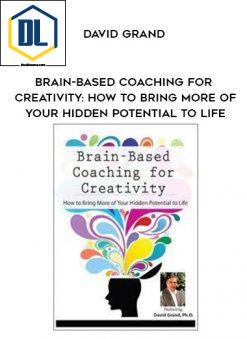 Brain-Based Coaching for Creativity: How to Bring More of Your Hidden Potential to Life – David Grand
1 × $26.00
Brain-Based Coaching for Creativity: How to Bring More of Your Hidden Potential to Life – David Grand
1 × $26.00


-68%
Buy With Coupon: DLC25 (-25%)
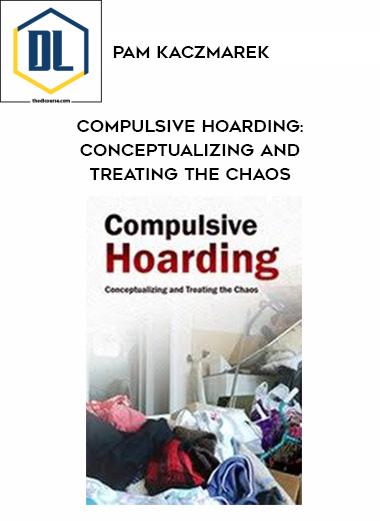
Compulsive Hoarding: Conceptualizing and Treating the Chaos – Pam Kaczmarek
Original price was: $109.99.$35.00Current price is: $35.00.
Description
Compulsive Hoarding: Conceptualizing and Treating the Chaos – Pam Kaczmarek
Salepage: Compulsive Hoarding: Conceptualizing and Treating the Chaos – Pam Kaczmarek
Description of Compulsive Hoarding: Conceptualizing and Treating the Chaos
A Complex and Unique Disorder
Previous treatments for hoarding have been vastly ineffective due in part to a lack of formal definition of the diagnostic criteria, deficits of applied research, faulty case conceptualization, and scant treatment interventions.
With the recent release of the DSM-5, in which Hoarding Disorder has finally been identified as its own disorder, appropriate clinical treatment interventions can now be guided by these revisions. The continual increase of media attention brings an onslaught of clients seeking clinical interventions from professional mental health care providers who are vastly unprepared to treat this rapidly growing and misunderstood population.
Although hoarding has traditionally been considered a symptom dimension within OCD and OCPD, recent research findings has proved otherwise and led to the latest DSM-5 revisions. Patients who hoard do not respond similarly to the psychotherapies or pharmacological treatments used for other OCD manifestations. Instead, a multimodal cognitive-behavioral and medication approach has been shown to have a much greater success rate in the treatment of compulsive hoarding.
This recording helps participants conceptualize the chaos specific to hoarding and learn treatment strategies that actually improve patient outcomes. Course work delves into the phenomenology associated with hoarding and OCD and investigates their similarities and differences. This recording covers both assessment and interventions, including case studies that illustrate the findings and prepare you to truly help your clients who hoard. Participants benefit from videos, group exercises, and adult learning theory methods. Don’t miss this valuable opportunity.
Objectives
- Explore the new DSM-5 criteria for Hoarding Disorder and distinguish Axis I OCD from Axis II Obsessive Compulsive Personality Disorder (OCPD)
- Recognize the behavioral and cognitive symptoms associated with hoarding
- Identify the unique complex characteristics of hoarding, including brain structural differences
- Examine the differences between organic hoarding (brain damage) and the hoarding in Hoarding Disorder
- Gain an overview of cognitive-behavioral and biopsychosocial perspectives on hoarding including etiological theories, possible vulnerability factors, course of disorder over the lifetime, and the impact of age and gender
- Determine what diagnostic tools can assist in proper assessment
- Discuss specific interventions for hoarding that are used by top researchers and clinicians
- Gain confidence with treatment planning for hoarding clients
Outline
FOUNDATIONS OF HOARDING: A UNIQUE, COMPLEX DISORDER
- Brief history of hoarding
- Previous working and current definition of hoarding disorder with possible case vignette
- Understanding what leads to clutter
- Understanding what’s most commonly hoarded
- Understanding how items collect and are acquired
- Common hoarding features
- Identify unique hoarding characteristics
- Neurocognitive deficits commonly seen in hoarding
- Behaviors of compulsive hoarding
- Cognitive Behavioral Therapy (CBT) model for hoarding
- Compulsive hoarding vs. OCD
- Hoarding vs. collecting: compare & contrast
- Hoarding in context to animal hoarding
- Risk factors in compulsive hoarding
- Trauma and& hoarding
- Basic demographics
- Impact of culture
- Distinguish Axis I OCD from Axis II Obsessive- Compulsive Personality Disorder (OCPD)
- Understanding obsessions vs. compulsions in OCD
ACCURATE ASSESSMENTS AND PROPER DIAGNOSIS
- Nosological considerations and clinical considerations that led to the DSM-5 reclassification of hoarding
- Co-morbid diagnoses—including Axis I & II disorders
- Organic hoarding vs. Hoarding Disorder
- Level of insight in hoarding vs. non-hoarding OCD
- Thinking styles, beliefs about possessions, and avoidance patterns
- Egosyntonic vs Egodystonic considerations
- Assessment tools specific to hoarding
TREATMENT PLANNING
- Understanding the role of insight in treating compulsive hoarding
- Demos and simulated exercise
- Stages of change and examples with compulsive hoarders
- Motivational interviewing for hoarding clients
- Brief discussion about brain structure differences
- Medications
- Value of psycho-education
INTERVENTIONS FOR HOARDING BEHAVIOR
- Session sequence suggestion
- CBT treatment planning model outline
- Treating acquiring and discarding
- Treating organization problems
- Overview of cognitive restructuring with hoarding patients
- Downward Arrow technique
- Behavioral experiment as tool with hoarders
- Somatic awareness as possible novel strategy
- Compulsive hoarding group work
- Watch outs!
- Must dos!
- Minimizing Relapse
Readmore about : Pam Kaczmarek
Delivery Policy
When will I receive my course?
You will receive a link to download your course immediately or within 1 to 21 days. It depends on the product you buy, so please read the short description of the product carefully before making a purchase.
How is my course delivered?
We share courses through Google Drive, so once your order is complete, you'll receive an invitation to view the course in your email.
To avoid any delay in delivery, please provide a Google mail and enter your email address correctly in the Checkout Page.
In case you submit a wrong email address, please contact us to resend the course to the correct email.
How do I check status of my order?
Please log in to TheDLCourse account then go to Order Page. You will find all your orders includes number, date, status and total price.
If the status is Processing: Your course is being uploaded. Please be patient and wait for us to complete your order. If your order has multiple courses and one of them has not been updated with the download link, the status of the order is also Processing.
If the status is Completed: Your course is ready for immediate download. Click "VIEW" to view details and download the course.
Where can I find my course?
Once your order is complete, a link to download the course will automatically be sent to your email.
You can also get the download link by logging into your TheDLCourse account then going to Downloads Page.
Related products
-83%
Original price was: $199.00.$33.00Current price is: $33.00.
-72%

Original price was: $199.99.$55.00Current price is: $55.00.
-82%
Original price was: $119.99.$21.00Current price is: $21.00.
-74%
Original price was: $99.00.$26.00Current price is: $26.00.

-80%
Original price was: $299.00.$59.00Current price is: $59.00.
-74%

Original price was: $149.00.$39.00Current price is: $39.00.
-89%

Original price was: $499.90.$53.00Current price is: $53.00.