-
×
 Joseph Riggio – 7 Days to Genius – Make 2018 Your Best Year Ever GB
1 × $55.00
Joseph Riggio – 7 Days to Genius – Make 2018 Your Best Year Ever GB
1 × $55.00 -
×
 ICBCH – Richard Nongard – Gold Level Hypnosis Certification Course
2 × $70.00
ICBCH – Richard Nongard – Gold Level Hypnosis Certification Course
2 × $70.00 -
×
 Jack Duncan – The Proof Protocol
1 × $9.00
Jack Duncan – The Proof Protocol
1 × $9.00 -
×
 Jasmine Star – Branding Strategies to Grow Your Business
1 × $9.00
Jasmine Star – Branding Strategies to Grow Your Business
1 × $9.00 -
×
 Jonathan Altfeld - Calibration Skills Home Study
1 × $9.00
Jonathan Altfeld - Calibration Skills Home Study
1 × $9.00 -
×
 Kirill Eremenko – Forex Robots – Expect To Earn 175% P.A. Forex Robot Included
1 × $9.00
Kirill Eremenko – Forex Robots – Expect To Earn 175% P.A. Forex Robot Included
1 × $9.00 -
×
 Talmadge Harper – Quantum Hypnosis Healing Personal MP3
1 × $33.00
Talmadge Harper – Quantum Hypnosis Healing Personal MP3
1 × $33.00 -
×
 Bill Williams Profitunity Private Lessons
1 × $80.00
Bill Williams Profitunity Private Lessons
1 × $80.00 -
×
 David Snyder – People Reading For Fun And Profit
1 × $19.00
David Snyder – People Reading For Fun And Profit
1 × $19.00 -
×
 Felix Economakis – 4Rs Model
1 × $69.00
Felix Economakis – 4Rs Model
1 × $69.00 -
×
 Subtle Energy Sciences – PranaHeart from Eric Thompson
1 × $22.00
Subtle Energy Sciences – PranaHeart from Eric Thompson
1 × $22.00 -
×
 John Overdurf – Changing Perspectives through the Rhizome
1 × $45.00
John Overdurf – Changing Perspectives through the Rhizome
1 × $45.00 -
×
 Jason Wojo – 60 Viral Video Scripts (60 Viral Topics + 60 Hooks Bundle)
1 × $11.00
Jason Wojo – 60 Viral Video Scripts (60 Viral Topics + 60 Hooks Bundle)
1 × $11.00 -
×
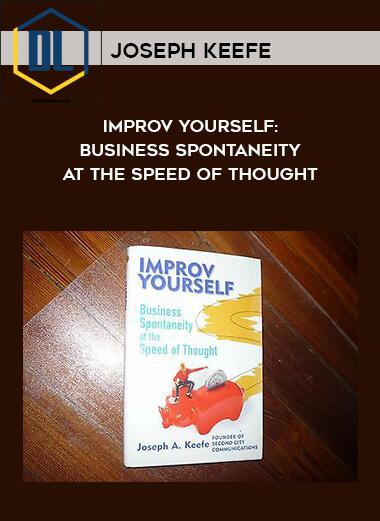 Joseph Keefe – Improv Yourself: Business Spontaneity at the Speed of Thought
1 × $17.00
Joseph Keefe – Improv Yourself: Business Spontaneity at the Speed of Thought
1 × $17.00 -
×
 AuthenticWorld (AMP) – Authentic Community Leadership
1 × $16.00
AuthenticWorld (AMP) – Authentic Community Leadership
1 × $16.00 -
×
 BRAINWAVE-SYNC – CHAKRA MEDITATIONS COMPLETE COLLECTION
1 × $19.00
BRAINWAVE-SYNC – CHAKRA MEDITATIONS COMPLETE COLLECTION
1 × $19.00 -
×
 Maddie Cohen – Blog Post Writing: Create Engaging Blogs
1 × $9.00
Maddie Cohen – Blog Post Writing: Create Engaging Blogs
1 × $9.00 -
×
 Justin Brooke – O.P.M. List Building Workshop
1 × $9.00
Justin Brooke – O.P.M. List Building Workshop
1 × $9.00 -
×
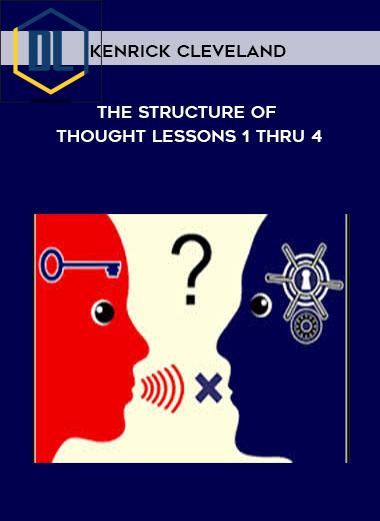 Kenrick Cleveland – Structure Of Thought
1 × $9.00
Kenrick Cleveland – Structure Of Thought
1 × $9.00 -
×
 Lynne McTaggart – Power Of Eight Intention Masterclass 2019
1 × $60.00
Lynne McTaggart – Power Of Eight Intention Masterclass 2019
1 × $60.00 -
×
 Erle Montaigue – MTG10 – Basic to Advanced Qigong
1 × $23.00
Erle Montaigue – MTG10 – Basic to Advanced Qigong
1 × $23.00 -
×
 Kenrick Cleveland – Unconscious Neuro Modelling (Unified and Complete)
1 × $9.00
Kenrick Cleveland – Unconscious Neuro Modelling (Unified and Complete)
1 × $9.00 -
×
 David Bond – Digital Pickup 2.0
1 × $9.00
David Bond – Digital Pickup 2.0
1 × $9.00 -
×
 Allans Pratt – Bad Boy Sex Secrets
1 × $23.00
Allans Pratt – Bad Boy Sex Secrets
1 × $23.00 -
×
 Arash Dibazar – The Hidden Vortex
1 × $37.00
Arash Dibazar – The Hidden Vortex
1 × $37.00


-80%
Buy With Coupon: DLC25 (-25%)
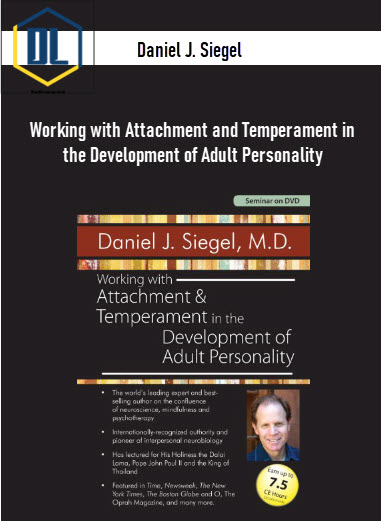
Working with Attachment and Temperament in the Development of Adult Personality with Daniel J. Siegel, M.D.
Original price was: $199.00.$39.00Current price is: $39.00.
Product Delivery: Instant Deliver
Description
Working with Attachment and Temperament in the Development of Adult Personality with Daniel J. Siegel, M.D.
Description of Working with Attachment and Temperament in the Development of Adult Personality
Psychotherapy enables individuals to identify patterns of thought, feeling, and behavior that may be restricting them from living a full and rewarding life. Some of these aspects of a person’s presenting profile may be due to experiences from attachment relationships while others may be a function of inborn neural propensities called temperament.
Join Daniel J. Siegel M.D., UCLA brain scientist, psychotherapist, world renowned expert and best-selling author, as he dives deeply into the study of how experiences interact with temperament in the unfolding human personality throughout the lifespan. You will focus on how to disentangle these important but distinct aspects of human development to optimize therapeutic outcome.
What you’ll learn in Working with Attachment and Temperament in the Development of Adult Personality
Serenity, Courage and Wisdom in the Psychotherapeutic Process
- Seeing the range of traits of an individual
- Discerning what is experientially formed adaptations and inborn neural propensities
- Dancing with complexity
The Importance of Genetics and Temperament in Human Development
- Schools of thought regarding temperament
- What does temperament have to do with personality?
- Where do childhood temperament variables go?
How Attachment Experiences Shape Development
- The science of attachment
- Patterns of adaptation
- Longitudinal findings
Neural Development, Relationship Patterns, and the Unfolding of Pathways of Mental Life
- One possible view of fitting temperament with attachment
- The PDP model: Patterns of Developmental Pathways of personality
- Clinical implications of the PDP model
Clinical Assessment of Adult Personality
- Applying the PDP view in day-to-day clinical practice—assessment
- The range of PDP distributions and its relationship to clinical treatment planning
- Learning to be at ease with PDP proclivities
The Chaos and Rigidity of Impaired Integration
- How attachment insecurity increases neural proclivities
- The propensity toward rigidity and chaos
- Planning a therapeutic strategy with PDP in mind
Moving Toward Change: Integration and Coming to Feel at Home in One’s Own Skin
- Enjoying PDP proclivities rather than being imprisoned by them
- Relationships and PDP variables
- Weaving the power of temperament frameworks with the adaptation of attachment within psychotherapy
Healing and Acceptance in Adult Personality
- The Plane of Possibility and the Wheel of Awareness
- Moving toward health in the face of restricted adaptations
- Pleasure in personality and the emergence of acceptance and harmony
Target Audience
Counselors, Social Workers, Psychologists, Psychotherapists, Therapists, Marriage and Family Therapists, Case Managers, Nurses, Occupational Therapists & Occupational Therapist Assistants, Other Mental Health Professionals
Objectives
- Outline ways in which childhood temperament may persist as adult personality.
- Identify the ways in which attachment influences the development of emotion regulation and the capacity for intimacy in adulthood.
- Discuss how psychotherapy can loosen the grip of temperament and heal the lingering impact of traumatic experiences.
- Identify the spectrum of personality traits and how these fit into the notion of “categories” of attachment.
- Explain the ways in which inborn neural propensities interact with experience to shape personality.
- Recognize the importance of genetics and temperament in human development.
About Daniel J. Siegel, M.D.

Daniel J. Siegel, MD, is a graduate of Harvard Medical School and completed his postgraduate medical education at UCLA with training in pediatrics and child, adolescent, and adult psychiatry. He is currently a clinical professor of psychiatry at the UCLA School of Medicine, founding co-director of UCLA’s Mindful Awareness Research Center, founding co-investigator at the UCLA Center for Culture, Brain and Development, and executive director of the Mindsight Institute, an educational center devoted to promoting insight, compassion, and empathy in individuals, families, institutions, and communities.
Dr. Siegel’s psychotherapy practice spans thirty years, and he has published extensively for the professional audience.
He serves as the Founding Editor for the Norton Professional Series on Interpersonal Neurobiology which includes over 70 textbooks.
Readmore about: Daniel J. Siegel
Delivery Policy
When will I receive my course?
You will receive a link to download your course immediately or within 1 to 21 days. It depends on the product you buy, so please read the short description of the product carefully before making a purchase.
How is my course delivered?
We share courses through Google Drive, so once your order is complete, you'll receive an invitation to view the course in your email.
To avoid any delay in delivery, please provide a Google mail and enter your email address correctly in the Checkout Page.
In case you submit a wrong email address, please contact us to resend the course to the correct email.
How do I check status of my order?
Please log in to TheDLCourse account then go to Order Page. You will find all your orders includes number, date, status and total price.
If the status is Processing: Your course is being uploaded. Please be patient and wait for us to complete your order. If your order has multiple courses and one of them has not been updated with the download link, the status of the order is also Processing.
If the status is Completed: Your course is ready for immediate download. Click "VIEW" to view details and download the course.
Where can I find my course?
Once your order is complete, a link to download the course will automatically be sent to your email.
You can also get the download link by logging into your TheDLCourse account then going to Downloads Page.
Related products
-85%

Original price was: $1,497.00.$227.00Current price is: $227.00.
-70%

Original price was: $129.00.$39.00Current price is: $39.00.
-97%

Original price was: $254.00.$7.00Current price is: $7.00.
-88%

Original price was: $795.00.$92.00Current price is: $92.00.
-61%

Original price was: $70.00.$27.00Current price is: $27.00.
-92%

Original price was: $388.00.$31.00Current price is: $31.00.
-67%

Original price was: $29.90.$10.00Current price is: $10.00.