-
×
 Julie Solomon – Pitch It Perfect
2 × $67.00
Julie Solomon – Pitch It Perfect
2 × $67.00 -
×
 Mark Larson – The Complete Guide to Technical Indicators
1 × $39.00
Mark Larson – The Complete Guide to Technical Indicators
1 × $39.00 -
×
 Ross Jeffries – Ultimate Language Pattern Collection
1 × $37.00
Ross Jeffries – Ultimate Language Pattern Collection
1 × $37.00 -
×
 Copyhackers – Copy School 2020
1 × $9.00
Copyhackers – Copy School 2020
1 × $9.00 -
×
 Danny Postma – The Exact Blueprint That Ranked My Sites #1 on Google
1 × $9.00
Danny Postma – The Exact Blueprint That Ranked My Sites #1 on Google
1 × $9.00 -
×
 Julie Bouche – Tiny Habits for Intuitive Eating
1 × $78.00
Julie Bouche – Tiny Habits for Intuitive Eating
1 × $78.00 -
×
 Troy Harris – Crypto New Rich Program
1 × $9.00
Troy Harris – Crypto New Rich Program
1 × $9.00 -
×
 Wendy Patton – Wealth Building Arsenal
1 × $107.00
Wendy Patton – Wealth Building Arsenal
1 × $107.00 -
×
 David Snyder – Secrets of Face Reading and Chinese Medical Hypnotherapy 2018
1 × $97.00
David Snyder – Secrets of Face Reading and Chinese Medical Hypnotherapy 2018
1 × $97.00 -
×
 Alexey Molchanov – Foundational Breathwork
1 × $37.00
Alexey Molchanov – Foundational Breathwork
1 × $37.00 -
×
 David Rainoshek – Juicefeasting – The 92-Day Nutrition Course
1 × $53.00
David Rainoshek – Juicefeasting – The 92-Day Nutrition Course
1 × $53.00 -
×
 Wrong Opinion – Man Explaining: The Manual For Women
1 × $13.00
Wrong Opinion – Man Explaining: The Manual For Women
1 × $13.00 -
×
 Wyckoffanalytics – Tape Reading Course: A Three-Part Series
1 × $71.00
Wyckoffanalytics – Tape Reading Course: A Three-Part Series
1 × $71.00 -
×
 Josh Altman & Cody Sperber – Your First Million in Real Estate
1 × $29.97
Josh Altman & Cody Sperber – Your First Million in Real Estate
1 × $29.97 -
×
 Product University – Unique Amazon Strategy
1 × $92.00
Product University – Unique Amazon Strategy
1 × $92.00 -
×
 Philipp Humm – Power of StorySelling
1 × $9.00
Philipp Humm – Power of StorySelling
1 × $9.00 -
×
 Bob Proctor & Michele Blood – Magnet To Money
1 × $15.00
Bob Proctor & Michele Blood – Magnet To Money
1 × $15.00 -
×
 Chase Reiner – Fortune Bots
1 × $9.00
Chase Reiner – Fortune Bots
1 × $9.00 -
×
 Dr Joel – Monster Mass – Functional Bodybuilding Program
1 × $37.00
Dr Joel – Monster Mass – Functional Bodybuilding Program
1 × $37.00 -
×
 Christina Berkley – The 5K Project
2 × $34.00
Christina Berkley – The 5K Project
2 × $34.00 -
×
 Essentials of Elite Performance – S-Phase
1 × $131.00
Essentials of Elite Performance – S-Phase
1 × $131.00 -
×
 Tiago Forte – Design Your Habits
1 × $22.00
Tiago Forte – Design Your Habits
1 × $22.00 -
×
 Dan Kennedy - Copywriting Mastery and Sales Thinking Boot Camp
1 × $75.00
Dan Kennedy - Copywriting Mastery and Sales Thinking Boot Camp
1 × $75.00 -
×
 Kenji Kumara – Clearing The 4 Major Archetypes: Wounded Child – Saboteur – Prostitute and
1 × $16.00
Kenji Kumara – Clearing The 4 Major Archetypes: Wounded Child – Saboteur – Prostitute and
1 × $16.00 -
×
 John Dupuy & Nadja Lind – iAwake Technologies – Strong Medicine
2 × $12.00
John Dupuy & Nadja Lind – iAwake Technologies – Strong Medicine
2 × $12.00 -
×
 Dr Bradley Nelson – The Body Code System 2.0
1 × $48.00
Dr Bradley Nelson – The Body Code System 2.0
1 × $48.00 -
×
 Bob Proctor – 12 Principles For Winning The Mind Game
1 × $13.00
Bob Proctor – 12 Principles For Winning The Mind Game
1 × $13.00 -
×
 William Bronchick – The Ultimate Guide to Buy & Hold Real Estate Course
1 × $62.00
William Bronchick – The Ultimate Guide to Buy & Hold Real Estate Course
1 × $62.00 -
×
 Wyckoffanalytics – Linda Bradford Raschke – Her Trades, Her Story
1 × $47.00
Wyckoffanalytics – Linda Bradford Raschke – Her Trades, Her Story
1 × $47.00 -
×
 Jack Hutson – Jack’s Blowjob Lessons
1 × $14.00
Jack Hutson – Jack’s Blowjob Lessons
1 × $14.00 -
×
 Liana Ling – Bullet Proof Meta (Facebook) Ads
1 × $9.00
Liana Ling – Bullet Proof Meta (Facebook) Ads
1 × $9.00 -
×
 Lynne McTaggart – Power Of Eight Intention Masterclass 2019
1 × $60.00
Lynne McTaggart – Power Of Eight Intention Masterclass 2019
1 × $60.00 -
×
 presellcrusher.com – Presell Crusher
1 × $27.00
presellcrusher.com – Presell Crusher
1 × $27.00 -
×
 GRACIE ACADEMY - Gracie Combatives Program
1 × $42.00
GRACIE ACADEMY - Gracie Combatives Program
1 × $42.00 -
×
 Joe Dispenza – The Magic Walk: A Guided Children’s Walking Meditation
1 × $10.00
Joe Dispenza – The Magic Walk: A Guided Children’s Walking Meditation
1 × $10.00 -
×
 RROP – Low Timeframe Supply & Demand
1 × $9.00
RROP – Low Timeframe Supply & Demand
1 × $9.00 -
×
 Paul Nicholls – Super Affiliate Classroom
1 × $42.00
Paul Nicholls – Super Affiliate Classroom
1 × $42.00 -
×
 Personal Brand Creator Pro
1 × $85.00
Personal Brand Creator Pro
1 × $85.00 -
×
 Body By Rings
1 × $33.00
Body By Rings
1 × $33.00 -
×
 Donna Eden – Shifting Deeply Embedded Patents
1 × $47.00
Donna Eden – Shifting Deeply Embedded Patents
1 × $47.00

-71%
Buy With Coupon: DLC25 (-25%)
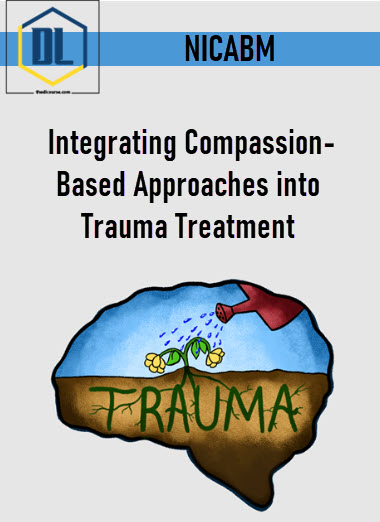
NICABM – Integrating Compassion-Based Approaches into Trauma Treatment
Original price was: $197.00.$57.00Current price is: $57.00.
Product Delivery : Instant Deliver
Description
NICABM – Integrating Compassion-Based Approaches into Trauma Treatment
Salepage: NICABM – Integrating Compassion-Based Approaches into Trauma Treatment
Description of Integrating Compassion-Based Approaches into Trauma Treatment
Unlock Healing for Trauma Patients with Compassion-Based Therapy
Working with trauma is some of the toughest work we do, both on us as practitioners and our patients.
But compassion-based therapies can enhance your interventions and support your clients through the difficult work of processing trauma.
Research suggests that compassion practice can act as a buffer against the harmful effects of trauma. It can help your client develop skills to approach traumatic memories without getting caught up in a threat response during your session.
Compassion practices can even equip your clients to repair ruptures following inadequate childhood attachment.
So how do we integrate compassion-oriented therapies into treatment and build a client’s capacity to process trauma?
We turned to the world’s leading experts in compassion-based therapy and asked them to share their best approaches for working with trauma.
How to Build Your Client’s Capacity for Compassion (and Why That Can Help Them Process Trauma)
Deborah Lee, DClinPsy Christopher Willard, PsyD
Christopher Germer, PhD Emiliana Simon-Thomas, PhD
Susan Pollak, MTS, EdD Kristin Neff, PhD
- The Dramatic Impact of Self-Compassion on PTSD
- Why Compassion-Based Approaches Are So Effective for Helping Patients Process Trauma
- What to Do When Early Childhood Trauma Has Compromised Your Patient’s Ability to Practice Self-Compassion
- How to Help Patients Cultivate Self-Compassion to Repair Attachment Ruptures
- A Powerful Metaphor to Help Patients Open Up to Self-Compassion After Trauma
Three Key Steps for Integrating Compassion-Based Approaches into the Treatment of Trauma
Dennis Tirch, PhD Deborah Lee, DClinPsy
Laura Silberstein-Tirch, PsyD
- Crucial Steps You Must Take Before Applying Compassion-Oriented Approaches to Your Patient’s Traumatic Memories
- How to Use Compassionate Mind Training to Heal a Traumatized Brain
- How to Help Your Patient Bring Compassion to Traumatic Memories
- The Game-Changing Power of Identifying “Safety Strategies” That Are Harming Your Client’s Relationships
How to Integrate Self-Compassion into the Three Stages of Trauma Treatment
Christopher Germer, PhD Susan Pollak, MTS, EdD
- Why Compassion Can Be So Effective in Helping Clients Reconnect with the World
- How Compassion Can Build Your Client’s Internal Resources and Their Capacity for Processing Trauma
Strategies to Help Patients When Trauma Creates Blocks to Compassion
Kristin Neff, PhD Christopher Germer, PhD
Laura Silberstein-Tirch, PsyD Jack Kornfield, PhD
Christopher Willard, PsyD Dennis Tirch, PhD
- How to Use Your Patient’s Blocks and Fears to Build Compassion-Based Skills
- Two Key Phrases for Working with “Backdraft” in Self-Compassion
- How Compassion Can Cultivate Courage and Accelerate Post-Traumatic Growth
- How to Use Compassion as Motivation for Transformation
Critical Insights: Integrating Compassion into the Treatment of Trauma
Kelly McGonigal, PhD Ron Siegel, PsyD Ruth Buczynski, PhD
- The Role Oxytocin Can Play When Integrating Compassion into Trauma Work
- Why Some Patients Experience a “Vulnerability Hangover” After Compassion Practice – and How to Mitigate It
- The Key Factor That Can Make Self-Compassion Sustainable for Patients Who Have Experienced Trauma
- Compassion-Based Practices to Help Patients Feel Safe and Accepted
- Specific De-Shaming Language to Normalize a Client’s Response to Trauma
Concrete Compassion-Based Strategies for Addressing Trauma (and How to Integrate Them into Your Work)
Rick Hanson, PhD Deborah Lee, DClinPsy Ashley Vigil-Otero, PhD
- Self-Compassion Skills Patients Can Use to Create a Sense of Safety
- Practical Exercises That Can Bring Compassion to Your Patient’s Trauma Story
- Two Specific Ways to Use Psychoeducation to Help Patients Process Traumatic Memories
- How to Apply Compassionate Imagery to Help Patients Create an Internal Support System
- Three Key Compassion-Based Ways to Help Patients Expand Their Window of Tolerance
What you’ll learn in Integrating Compassion-Based Approaches into Trauma Treatment
- Downloadable videos so you can watch at your convenience, on any device
- Check mark Audio recordings you can download and listen to at home, in the car, at the gym or wherever you like
- Check mark TalkBack Segments to distill key ideas (this is where we “land” the session)
- Check mark Next Week in Your Practice sessions to give you concrete strategies to use with patients
- Check mark Professionally-formatted transcripts of the sessions, to make review and action simple
- Check mark Four downloadable bonus videos to help you apply compassion more effectively to trauma therapy
About Ruth Buczynski, PhD &Ashley Vigil-Otero, PsyD
Course Director: Ruth Buczynski, PhD
Dr. Ruth Buczynski is a licensed psychologist and founder and president of The National Institute for the Clinical Application of Behavioral Medicine (NICABM).
NICABM helps physicians, nurses, psychologists, social workers, and counselors – practitioners who have some of the most significant and life-changing missions on the planet – provide cutting-edge, research-based treatment strategies to their patients.
For more than 25 years, NICABM has offered accredited training and professional development programs to thousands of practitioners worldwide.
Program Developer & Co-Host: Ashley Vigil-Otero, PsyD
Dr. Ashley Vigil-Otero is a licensed clinical psychologist and program developer at NICABM. Her education and experience include training at Harvard Medical School, Cambridge Health Alliance and Vanderbilt University.
Dr. Vigil-Otero has a private practice in Florida, where she specializes in compassion-oriented psychotherapy with clients across the lifespan. She is passionate about raising public awareness on mental health, resilience, and well-being.
Readmore about: NICABM
Delivery Policy
When will I receive my course?
You will receive a link to download your course immediately or within 1 to 21 days. It depends on the product you buy, so please read the short description of the product carefully before making a purchase.
How is my course delivered?
We share courses through Google Drive, so once your order is complete, you'll receive an invitation to view the course in your email.
To avoid any delay in delivery, please provide a Google mail and enter your email address correctly in the Checkout Page.
In case you submit a wrong email address, please contact us to resend the course to the correct email.
How do I check status of my order?
Please log in to TheDLCourse account then go to Order Page. You will find all your orders includes number, date, status and total price.
If the status is Processing: Your course is being uploaded. Please be patient and wait for us to complete your order. If your order has multiple courses and one of them has not been updated with the download link, the status of the order is also Processing.
If the status is Completed: Your course is ready for immediate download. Click "VIEW" to view details and download the course.
Where can I find my course?
Once your order is complete, a link to download the course will automatically be sent to your email.
You can also get the download link by logging into your TheDLCourse account then going to Downloads Page.
Related products
-75%

Original price was: $99.00.$25.00Current price is: $25.00.
-63%

Original price was: $99.00.$37.00Current price is: $37.00.
-89%

Original price was: $499.00.$57.00Current price is: $57.00.
-67%

Original price was: $29.90.$10.00Current price is: $10.00.
-91%
Original price was: $150.00.$13.00Current price is: $13.00.
-62%

Original price was: $66.00.$25.00Current price is: $25.00.
-72%
Original price was: $125.00.$35.00Current price is: $35.00.
-68%
Original price was: $37.00.$12.00Current price is: $12.00.