-
×
 Richard Bandler – Self Esteem Rhythm Trance
1 × $15.00
Richard Bandler – Self Esteem Rhythm Trance
1 × $15.00 -
×
 10 Best Diamond Aloha Activations, Discourses and Transmissions – Dia
1 × $87.00
10 Best Diamond Aloha Activations, Discourses and Transmissions – Dia
1 × $87.00 -
×
 NICABM – Working With Core Beliefs of “Never Good Enough”
2 × $27.00
NICABM – Working With Core Beliefs of “Never Good Enough”
2 × $27.00 -
×
 Wrong Opinion – Man Explaining: The Manual For Women
1 × $13.00
Wrong Opinion – Man Explaining: The Manual For Women
1 × $13.00 -
×
 John Assaraf – Winning The Inner Game of Money
1 × $46.00
John Assaraf – Winning The Inner Game of Money
1 × $46.00 -
×
 Arash Dibazar – Ravi
1 × $7.00
Arash Dibazar – Ravi
1 × $7.00 -
×
 Derek Rake – Shogun Sequences Handbook Volume 2
2 × $19.00
Derek Rake – Shogun Sequences Handbook Volume 2
2 × $19.00 -
×
 Sean Michael Andrews – Instant and Rapid Inductions (2nd edition)
1 × $23.00
Sean Michael Andrews – Instant and Rapid Inductions (2nd edition)
1 × $23.00 -
×
 Anastasia – Pinterest SEO Traffic Secrets
1 × $17.00
Anastasia – Pinterest SEO Traffic Secrets
1 × $17.00 -
×
 Digital Income Project – Content MBA
1 × $33.00
Digital Income Project – Content MBA
1 × $33.00 -
×
 Jermain Linton – Create Unlimited $450 Credit Adwords Accounts and VCCs
1 × $50.00
Jermain Linton – Create Unlimited $450 Credit Adwords Accounts and VCCs
1 × $50.00 -
×
 Keith Cunningham – Plan or Get Slaughtered
1 × $25.00
Keith Cunningham – Plan or Get Slaughtered
1 × $25.00 -
×
 Steven Heller – Unconscious Restructuring
2 × $19.90
Steven Heller – Unconscious Restructuring
2 × $19.90 -
×
 John Overdurf – Splitting Synesthesias within the Rhizome
1 × $42.00
John Overdurf – Splitting Synesthesias within the Rhizome
1 × $42.00 -
×
 Jared James – Blueprint For Real Estate Success
2 × $75.00
Jared James – Blueprint For Real Estate Success
2 × $75.00 -
×
 Dr Joel – Body Weight Training – Advance On The Go Training
1 × $25.00
Dr Joel – Body Weight Training – Advance On The Go Training
1 × $25.00 -
×
 Cris Chico – Find Motivated Sellers Online
1 × $54.95
Cris Chico – Find Motivated Sellers Online
1 × $54.95 -
×
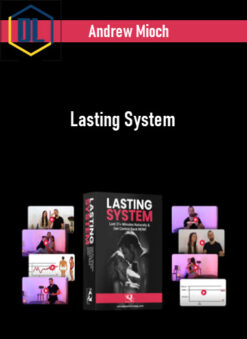 Andrew Mioch – Lasting System
2 × $273.00
Andrew Mioch – Lasting System
2 × $273.00 -
×
 ICBCH – Richard Nongard – Gold Level Hypnosis Certification Course
1 × $70.00
ICBCH – Richard Nongard – Gold Level Hypnosis Certification Course
1 × $70.00 -
×
 Greg Williams – Candid Photography Skills
1 × $21.00
Greg Williams – Candid Photography Skills
1 × $21.00 -
×
 The Social Heartistry Academy
1 × $47.00
The Social Heartistry Academy
1 × $47.00 -
×
 Ross Jeffries – New Code Next Generation
1 × $21.00
Ross Jeffries – New Code Next Generation
1 × $21.00 -
×
 Talmadge Harper – Human Lie Detector
1 × $15.00
Talmadge Harper – Human Lie Detector
1 × $15.00 -
×
 Tiago Forte – Design Your Habits
1 × $22.00
Tiago Forte – Design Your Habits
1 × $22.00 -
×
 Ross Jeffries – Ultimate Language Pattern Collection
1 × $37.00
Ross Jeffries – Ultimate Language Pattern Collection
1 × $37.00 -
×
 Russ Horn – Ultra Blue Forex
1 × $9.00
Russ Horn – Ultra Blue Forex
1 × $9.00 -
×
 Twyla Jones - Embracing the Storm
1 × $35.00
Twyla Jones - Embracing the Storm
1 × $35.00 -
×
 Philipp Humm – Power of StorySelling
1 × $9.00
Philipp Humm – Power of StorySelling
1 × $9.00 -
×
 Jason Julius – Rock Hard Code
1 × $16.00
Jason Julius – Rock Hard Code
1 × $16.00 -
×
 NICABM – How to Work with the Part of Trauma That Your Patient Can’t Verbalize
1 × $25.00
NICABM – How to Work with the Part of Trauma That Your Patient Can’t Verbalize
1 × $25.00 -
×
 Product University – Unique Amazon Strategy
2 × $92.00
Product University – Unique Amazon Strategy
2 × $92.00 -
×
 George Hutton – Alpha Female
1 × $10.00
George Hutton – Alpha Female
1 × $10.00 -
×
 Scott Jack – Magnetic Interaction
1 × $15.00
Scott Jack – Magnetic Interaction
1 × $15.00 -
×
 Sasha Cobra – Nitvana Bodywork
1 × $29.90
Sasha Cobra – Nitvana Bodywork
1 × $29.90 -
×
 Matt Clark and Jason Katzenback – Amazing Selling Machine 11
1 × $9.00
Matt Clark and Jason Katzenback – Amazing Selling Machine 11
1 × $9.00 -
×
 Alexander – Day Game Phone Game
1 × $9.00
Alexander – Day Game Phone Game
1 × $9.00 -
×
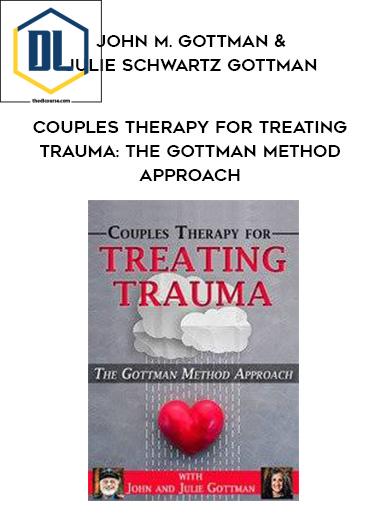 Couples Therapy for Treating Trauma: The Gottman Method Approach – John M. Gottman & Julie Schwartz Gottman
1 × $34.00
Couples Therapy for Treating Trauma: The Gottman Method Approach – John M. Gottman & Julie Schwartz Gottman
1 × $34.00 -
×
 Qi Gong Training – Ultra Mi Zong Taoist Yoga
1 × $36.80
Qi Gong Training – Ultra Mi Zong Taoist Yoga
1 × $36.80 -
×
 BRYAN KREUZBERGER – BREAKTHROUGH EMAIL
1 × $9.00
BRYAN KREUZBERGER – BREAKTHROUGH EMAIL
1 × $9.00 -
×
 Alicia Streger – 28-Day Transformation Challenge
1 × $25.00
Alicia Streger – 28-Day Transformation Challenge
1 × $25.00 -
×
 Marshall Sylver Collection
1 × $30.00
Marshall Sylver Collection
1 × $30.00


-78%

Buy With Coupon: DLC25 (-25%)
Joe Loizzo – Buddhist Psychology And Contemplative Psychotherapy – Collection
Original price was: $149.00.$33.00Current price is: $33.00.
Delivery: Instant Delivery
Description
Joe Loizzo – Buddhist Psychology And Contemplative Psychotherapy – Collection
Description Of Buddhist Psychology And Contemplative Psychotherapy
As mindfulness becomes a household word, and its practice is increasingly taken up into pop psychology, medicine and psychotherapy, there is a growing interest among professionals and the public at large in the traditional systems of science, psychology, and healing which are its living source. This course puts the science and practice of mindfulness in the context of Buddhist psychology, and explains how it is most effectively understood and used, not just to “be in the moment” but to help our minds and brains embody the wisdom, awareness, and kindness that can make life freer, healthier, and happier, one moment, one day at a time.
Beyond the psychology of mindful insight and change, the Buddhist tradition developed less known compassion training techniques to help people living busy lives in the world thrive together with others in open-mindedness, warm heartedness, and altruistic engagement. Eventually these techniques were enhanced by embodied contemplative arts like role-modeling imagery, heroic narrative, disarming posture and breathing to expose and transform the normally unconscious depths of the human mind-brain, allowing people to embody the creative leadership powers of heroic vision and flow.
What you’ll learn in Buddhist Psychology And Contemplative Psychotherapy
- Module 1: Between East and West
Introduces the fast growing dialogue between Buddhist and Western psychology, explaining how and why Buddhist thought and practice are uniquely suited to breaking down centuries old barriers between modern science and spiritual traditions, and presenting the Nalanda tradition (integrating three waves of contemplative science in one continuous stream) as the most modern, scientific, and comprehensive synthesis of the major schools of Buddhist psychology. - Module 2: Personal Self Healing
Explores the basic science of personal self-healing in Buddhist psychology, based on mindfulness, insight, and kindness. The full benefit of this science for turning addiction, anxiety, and depression into inner freedom and lasting happiness is contrasted with the limited and fleeting benefits of pop mindfulness practice. Current neuroscience models of mindfulness and current methods of mindfulness-based therapy are compared with the rigorous understanding and full-bored practice preserved in the Nalanda tradition. - Module 3: Social Healing
Explores the interpersonal science of social healing in Buddhist psychology, based on compassion training, radical openness, and enlightened altruism. Unpacks the full power of this positive science for transforming traumatic emotions, reactive relationships, and social oppression into equanimity, healthy interdependence, and global empathy. Current neuroscience models of empathy and compassion and current methods of compassion-based therapy are compared with the profound wisdom and and expansive practice preserved in the Nalanda tradition. - Module 4: Embodied Healing
Explores the mind/body science of embodied healing in Buddhist psychology, based on heroic vision, transformative flow states, and intuitive openness. It fleshes out the full depth and breadth of this embodied science for transforming buried traumas, reactive instincts, and unconscious narcissism into creative vision, inspired energy, and embodied altruism. Current neuroscience models of imagery and flow and current methods of embodied therapy are compared with the radical mind-brain integration and world-transforming arts preserved in the Nalanda tradition.
Students who take this course will:
- The history and philosophy of Buddhist Psychology.
- The three waves of Buddhist Contemplative practice.
- The latest scientific findings that are changing the conversation between East and West.
- Methods of self-healing that have been transforming lives for thousands of years.
- Skills and strategies to implement in your own personal practice or clinical practice.
- Knowledge and inspiration that will shift your perspective on reality, your relationships and your embodiment.
Author Joe Loizzo
Joe Loizzo, M.D., Ph.D. is a contemplative psychotherapist, clinical researcher, and Buddhist scholar-teacher who integrates ancient contemplative science and technology with current breakthroughs in neuroscience and optimal health. After training in psychiatry at Harvard and completing a Ph.D. in Buddhist Studies at Columbia, he founded Nalanda Institute for Contemplative Science, a non-profit that helps people build sustainable happiness, compassion, and leadership through integrating science-based contemplative skills into their daily lives.
On faculty at the Weill Cornell Center for Integrative Medicine and the Columbia University Center for Buddhist Studies, Dr. Loizzo lectures widely on the role of meditative learning in the future of heath, education, and leadership, and teaches regular public classes and workshops at his Nalanda Institute, and Tibet House US. In 2007, he published NagarjunaÕs Reason Sixty with ChandrakirtiÕs Commentary, a translation study of contemplative self-analysis in Buddhism.
His second book, Sustainable Happiness: The Mind Science of Well-Being, Altruism, and Inspiration, appeared in the Routledge Behavioral Science Series in 2012. He has published dozens of chapters and articles on contemplative science in peer reviewed books and journals including The Journal of Religion, the Annual Review of Psychiatry, and the Annals of the New York Academy of Sciences. Dr. Loizzo has a private psychotherapy practice in Manhattan, where he lives with his wife, Gerardine, and their sons Maitreya and Ananda.
More courses from the same author: Joe Loizzo
Delivery Policy
When will I receive my course?
You will receive a link to download your course immediately or within 1 to 21 days. It depends on the product you buy, so please read the short description of the product carefully before making a purchase.
How is my course delivered?
We share courses through Google Drive, so once your order is complete, you'll receive an invitation to view the course in your email.
To avoid any delay in delivery, please provide a Google mail and enter your email address correctly in the Checkout Page.
In case you submit a wrong email address, please contact us to resend the course to the correct email.
How do I check status of my order?
Please log in to TheDLCourse account then go to Order Page. You will find all your orders includes number, date, status and total price.
If the status is Processing: Your course is being uploaded. Please be patient and wait for us to complete your order. If your order has multiple courses and one of them has not been updated with the download link, the status of the order is also Processing.
If the status is Completed: Your course is ready for immediate download. Click "VIEW" to view details and download the course.
Where can I find my course?
Once your order is complete, a link to download the course will automatically be sent to your email.
You can also get the download link by logging into your TheDLCourse account then going to Downloads Page.
Related products
-99%
Original price was: $997.00.$9.00Current price is: $9.00.
-59%
Original price was: $90.00.$37.00Current price is: $37.00.
-100%
Original price was: $3,397.00.$9.00Current price is: $9.00.
-87%

Original price was: $497.00.$67.00Current price is: $67.00.
-95%

Original price was: $795.00.$39.00Current price is: $39.00.
-45%
Original price was: $497.00.$273.00Current price is: $273.00.
-99%

Original price was: $3,495.00.$25.00Current price is: $25.00.
-95%

Original price was: $997.00.$47.00Current price is: $47.00.