-
×
 Dean Graziosi & Tony Robbins – The Launchpad Program
1 × $9.00
Dean Graziosi & Tony Robbins – The Launchpad Program
1 × $9.00 -
×
 Julie Solomon – Pitch It Perfect
1 × $67.00
Julie Solomon – Pitch It Perfect
1 × $67.00 -
×
 Andrew Mioch – Lasting System
2 × $273.00
Andrew Mioch – Lasting System
2 × $273.00 -
×
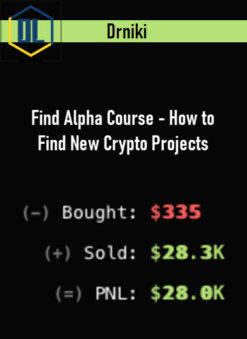 Drniki – Find Alpha Course – How to Find New Crypto Projects
1 × $70.00
Drniki – Find Alpha Course – How to Find New Crypto Projects
1 × $70.00 -
×
 Russ Horn – Ultra Blue Forex
1 × $9.00
Russ Horn – Ultra Blue Forex
1 × $9.00 -
×
 Lynne McTaggart – Power Of Eight Intention Masterclass 2019
1 × $60.00
Lynne McTaggart – Power Of Eight Intention Masterclass 2019
1 × $60.00 -
×
 Cole Gordon – 8 Figure Boardroom Mastermind
1 × $9.00
Cole Gordon – 8 Figure Boardroom Mastermind
1 × $9.00 -
×
 Mark Rasmus – Intrinsic Energies of Internal Martial Arts
1 × $12.00
Mark Rasmus – Intrinsic Energies of Internal Martial Arts
1 × $12.00 -
×
 Master Trader – Learn Trading Late Day Breakouts & Breakdowns
1 × $19.00
Master Trader – Learn Trading Late Day Breakouts & Breakdowns
1 × $19.00 -
×
 Alison Armstrong – The Heart of Partnership
1 × $92.00
Alison Armstrong – The Heart of Partnership
1 × $92.00 -
×
 David Rainoshek – Juicefeasting – The 92-Day Nutrition Course
1 × $53.00
David Rainoshek – Juicefeasting – The 92-Day Nutrition Course
1 × $53.00 -
×
 Apteros Trading – Learn to Scalp
1 × $79.00
Apteros Trading – Learn to Scalp
1 × $79.00 -
×
 Lynne McTaggart – The New Science: The Basics Audio Course
1 × $19.00
Lynne McTaggart – The New Science: The Basics Audio Course
1 × $19.00 -
×
 Jon Benson – VSL Fast Track 2018
1 × $48.00
Jon Benson – VSL Fast Track 2018
1 × $48.00 -
×
 Victor Casler – Personalized DeFi Crash Course
1 × $10.00
Victor Casler – Personalized DeFi Crash Course
1 × $10.00 -
×
 NICABM – Working With Core Beliefs of “Never Good Enough”
1 × $27.00
NICABM – Working With Core Beliefs of “Never Good Enough”
1 × $27.00 -
×
 Keith Cunningham – Plan or Get Slaughtered
1 × $25.00
Keith Cunningham – Plan or Get Slaughtered
1 × $25.00 -
×
 Richard Bandler – Ericksonian Hypnosis – An NLP Perspective
1 × $27.00
Richard Bandler – Ericksonian Hypnosis – An NLP Perspective
1 × $27.00 -
×
 John Demartini – The Loving Relationship Formula
1 × $30.00
John Demartini – The Loving Relationship Formula
1 × $30.00 -
×
 Managing and Thriving in Uncertainty John Overdurf
1 × $9.00
Managing and Thriving in Uncertainty John Overdurf
1 × $9.00 -
×
 Jim Huntzicker – MLS Domination
1 × $30.00
Jim Huntzicker – MLS Domination
1 × $30.00 -
×
 Rich Shy Girl – The Formula
1 × $9.00
Rich Shy Girl – The Formula
1 × $9.00 -
×
 RROP – Low Timeframe Supply & Demand
1 × $9.00
RROP – Low Timeframe Supply & Demand
1 × $9.00 -
×
 Billy Gene – 5 Day AI Crash Course for Marketers
1 × $35.00
Billy Gene – 5 Day AI Crash Course for Marketers
1 × $35.00 -
×
 BeSomebodyFX – The Real Fundamental Analysis
1 × $11.00
BeSomebodyFX – The Real Fundamental Analysis
1 × $11.00 -
×
 Success Academy – Real Leadership Roadmap
1 × $47.00
Success Academy – Real Leadership Roadmap
1 × $47.00 -
×
 Cris Chico – Find Motivated Sellers Online
1 × $54.95
Cris Chico – Find Motivated Sellers Online
1 × $54.95 -
×
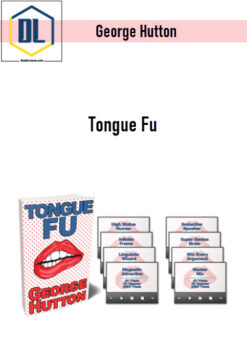 George Hutton – Tongue Fu
1 × $20.00
George Hutton – Tongue Fu
1 × $20.00 -
×
 Ben Amos – Online Video Strategy Blueprint
1 × $105.00
Ben Amos – Online Video Strategy Blueprint
1 × $105.00 -
×
 Matt Clark and Jason Katzenback – Amazing Selling Machine 11
1 × $9.00
Matt Clark and Jason Katzenback – Amazing Selling Machine 11
1 × $9.00 -
×
 Ross Jeffries – Speed Seduction – Methods and Masters Gold Walkups
1 × $19.00
Ross Jeffries – Speed Seduction – Methods and Masters Gold Walkups
1 × $19.00 -
×
 Kristina Azarenko – Website Migrations (Advanced)
1 × $46.00
Kristina Azarenko – Website Migrations (Advanced)
1 × $46.00 -
×
 Bob Proctor – The New Lead The Field Coaching Program
1 × $21.00
Bob Proctor – The New Lead The Field Coaching Program
1 × $21.00 -
×
 Troy Harris – Crypto New Rich Program
1 × $9.00
Troy Harris – Crypto New Rich Program
1 × $9.00


-76%

Buy With Coupon: DLC25 (-25%)
Wall Street Prep – Basic Package
Original price was: $199.00.$47.00Current price is: $47.00.
Product Delivery : Instant Deliver
Description
Wall Street Prep – Basic Package
Salepage : Wall Street Prep – Basic Package
An abbreviated version of the Premium Package that focuses exclusively on financial statement modeling. Trainees will learn modeling best practices and build a complete financial statement model. Valuation modeling included in the Premium Package.
Wall Street Prep Basic Package: Financial Statement Modeling
In this course, you will develop a 3-statement model completely from scratch, inputting historical data and assumptions to project out financial statements using step-by-step instruction on selecting, locating, and developing appropriate projection drivers. At completion, you will have developed a complete and comprehensive three-statement model using various supporting schedules.
Course Objective
In this course, you will develop a 3-statement model completely from scratch, inputting historical data and assumptions to project out financial statements using step-by-step instruction on selecting, locating, and developing appropriate projection drivers. At completion, you will have developed a complete and comprehensive three-statement model using various supporting schedules. By the end of the course, trainees will gain skills that lay the foundation for many other modeling methodologies.
At completion, trainees will have developed a 3-statement model using various supporting schedules and best practices.
What You Will Learn
- Excel shortcuts and functions frequently used in financial modeling
- Excel settings and formatting best practices for financial modeling
- Creating model plugs via the revolver and cash sweep
- Dealing with circularities in the model
- Building a fully integrated 3-statement model using established forecasting and schedule conventions
- Balancing the model and inserting automated checks
- Perform sensitivity & scenario analysis
- How to efficiently check models for errors, accuracy and integrity
Wall Street Prep’s Basic Package is used at top financial institutions and business schools.
Full Course Agenda
Chapter 1: Overview
- Introduction
- Excel Settings for Modeling
- Keyboard Shortcuts
- The Boost Excel Add-In
Chapter 2: Financial Modeling Best Practices
- Formatting Conventions
- Modeling Best Practices
- Naming, Linking & Deleting Cells
- Model Structure
Chapter 3: Preparing for the Case Study
- Gathering Documents for Modeling (the “PIB”)
- Apple Case Study Introduction
Chapter 4: The Income Statement
- Modeling the Historical Income Statement, Part 1
- Modeling the Historical Income Statement, Part 2
- Introduction to Forecasting
- Segment-Level Revenue Forecasting
- Operations Forecasting
Chapter 5: Forecasting the Balance Sheet: Working Capital
- Inputting the Historical Balance Sheet
- Working Capital Forecasting & Roll-Forward Mechanics
- Accounts Receivable, Part 1
- Accounts Receivable, Part 2
- Inventory
- Accounts Payable
- Accrued Expenses & Deferred Revenue
Chapter 6: Long Term Assets & Liabilities
- Intangible Assets
- Modeling Intangible Assets
- PP&E
- Modeling PP&E
- Other Balance Sheet Assets
- Modeling Other Current Assets
- Deferred Tax Assets
- Deferred Tax Liabilities
- Other Liabilities
- Modeling Deferred Taxes & Other Balance Sheet Items
Chapter 7: Debt
- Debt
- Modeling Debt
Chapter 8: Balance Sheet Equity
- Capital Stock
- Modeling Capital Stock
- Treasury Stock
- Modeling Treasury Stock
- Retained Earnings and OCI
- Modeling Retained Earnings
- Modeling Other Comprehensive Income
- Linking Schedules Back to the Balance Sheet
Chapter 9: The Cash Flow Statement
- Cash Flow Statement Introductions
- Review: The Cash Flow Statement
- Cash From Operations
- Modeling Cash from Operations
- Cash From Investing & Other Financing Activities
- Modeling Cash from Investing & Other Financing Activities
- The Lemonade Stand
Chapter 10: The Model Plugs: Revolver & Cash
- Understanding the Role of the Revolver in Financial Models
- Modeling the Revolver
- Modeling Interest Income
- Dealing with Circularities in Financial Models
Chapter 11: Earnings Per Share
- EPS
- Modeling EPS
Chapter 12: Finishing Touches
- Integrity Checking & Balancing the Model
- Sensitivity Analysis Using Data Tables
- Scenario Analysis
Chapter 13: Deeper Dives
- Depreciation Waterfall
Readmore about : Wall Street Prep
Delivery Policy
When will I receive my course?
You will receive a link to download your course immediately or within 1 to 21 days. It depends on the product you buy, so please read the short description of the product carefully before making a purchase.
How is my course delivered?
We share courses through Google Drive, so once your order is complete, you'll receive an invitation to view the course in your email.
To avoid any delay in delivery, please provide a Google mail and enter your email address correctly in the Checkout Page.
In case you submit a wrong email address, please contact us to resend the course to the correct email.
How do I check status of my order?
Please log in to TheDLCourse account then go to Order Page. You will find all your orders includes number, date, status and total price.
If the status is Processing: Your course is being uploaded. Please be patient and wait for us to complete your order. If your order has multiple courses and one of them has not been updated with the download link, the status of the order is also Processing.
If the status is Completed: Your course is ready for immediate download. Click "VIEW" to view details and download the course.
Where can I find my course?
Once your order is complete, a link to download the course will automatically be sent to your email.
You can also get the download link by logging into your TheDLCourse account then going to Downloads Page.
Related products
-97%

Original price was: $1,500.00.$40.00Current price is: $40.00.
-48%
Original price was: $21.00.$11.00Current price is: $11.00.
-30%
Original price was: $27.00.$19.00Current price is: $19.00.
-99%
Original price was: $3,170.00.$45.00Current price is: $45.00.
-96%

Original price was: $497.00.$19.00Current price is: $19.00.
-99%

Original price was: $997.00.$10.00Current price is: $10.00.
-95%

Original price was: $795.00.$39.00Current price is: $39.00.
-97%

Original price was: $300.00.$9.00Current price is: $9.00.